_edited.png)
Machine Learning Course #1
This course is designed for beginners who want to understand the fundamentals of machine learning. It covers the basic concepts, techniques, and applications of machine learning.
This course is designed for beginners who want to understand the fundamentals of machine learning. It covers the basic concepts, techniques, and applications of machine learning.
Course Title: Introduction to Machine Learning for Beginners
Course Overview
This course is designed for beginners who want to understand the fundamentals of machine learning. It covers the basic concepts, techniques, and applications of machine learning, providing a solid foundation for further study in this exciting field.
Course Structure
The course is divided into 8 modules, each focusing on different aspects of machine learning. Each module includes lectures, readings, practical exercises, and quizzes.
Module 1: Introduction to Machine Learning
What is Machine Learning?
History and Evolution of Machine Learning
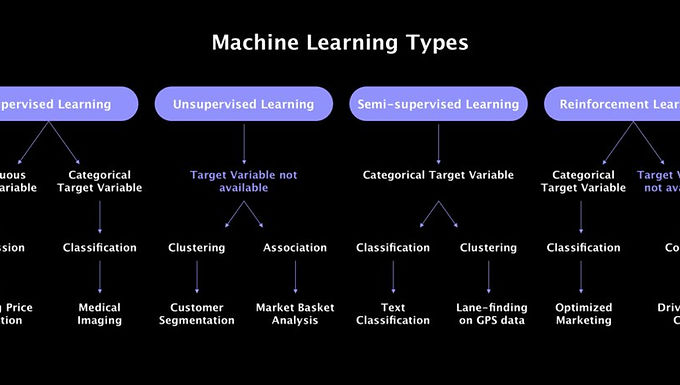
Types of Machine Learning: Supervised, Unsupervised, and Reinforcement Learning
Applications of Machine Learning
Module 2: Basics of Python for Machine Learning
Introduction to Python Programming
Data Types and Structures
Control Structures: Loops and Conditionals
Functions and Modules
Libraries for Data Science: NumPy, Pandas, Matplotlib
Module 3: Data Preprocessing
Importance of Data Preprocessing
Data Cleaning: Handling Missing Values and Outliers
Data Transformation: Normalization and Standardization
Feature Selection and Engineering
Module 4: Supervised Learning Algorithms
Introduction to Supervised Learning
Linear Regression
Logistic Regression
Decision Trees
Support Vector Machines (SVM)
Evaluation Metrics: Accuracy, Precision, Recall, F1 Score
Module 5: Unsupervised Learning Algorithms
Introduction to Unsupervised Learning
Clustering: K-Means, Hierarchical Clustering
Dimensionality Reduction: PCA (Principal Component Analysis)
Evaluation of Clustering Algorithms
Module 6: Model Evaluation and Selection
Train-Test Split
Cross-Validation Techniques
Hyperparameter Tuning
Overfitting and Underfitting
Module 7: Introduction to Neural Networks
What are Neural Networks?
Basic Structure of Neural Networks
Activation Functions
Training Neural Networks: Backpropagation
Introduction to Deep Learning
Module 8: Real-World Applications of Machine Learning
Case Studies: Healthcare, Finance, Retail, and More
Ethics in Machine Learning
Future Trends in Machine Learning
Course Requirements
No prior knowledge of machine learning is required.
Basic understanding of programming concepts is helpful.
A computer with internet access for practical exercises.
Course Completion
Upon completion of the course, participants will receive a certificate and will be equipped with the fundamental skills to pursue further studies in machine learning and data science.
Recommended Resources
Books: "Hands-On Machine Learning with Scikit-Learn, Keras, and TensorFlow" by Aurélien Géron
Online Resources: Coursera, edX, and Kaggle for practical projects
Communities: Join online forums and groups for networking and support
Conclusion
This course aims to provide a comprehensive introduction to machine learning, equipping beginners with essential knowledge and skills to explore this dynamic field further.